

Cabeza de Negro Fruit, Also Known as Soncoyo
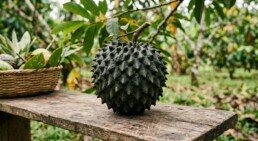
Imagine walking through a tropical forest and stumbling upon a fruit that seems straight out of a myth: on the outside, a dark, spiky rind that commands respect; on the inside, an explosion of orange color, intense aroma, and creamy flavor that wins you over from the very first bite. That is the cabeza de negro (or soncoya), one of Central and South America's most fascinating exotic treasures.
If you thought soursop (guanábana) and cherimoya were the only queens of the Annonaceae family, get ready to discover a fruit that has it all: a distant origin, an extraordinary nutritional profile, and an agro-industrial potential that is starting to captivate the global market. Join us to discover why this exotic fruit deserves a place on your table and in your life!
The cabeza de negro (known scientifically as Annona purpurea and popularly as soncoya or ilama) is an exotic treasure of the annona world, valued for its skin with pyramidal bumps and its striking, bright orange pulp.
Origin and History
This tropical fruit is native to Central America and the lowlands of northern South America. Historically cultivated by indigenous communities in tropical dry and humid forests, Annona purpurea has been a seasonal food and medicinal resource for centuries. Its penetrating aroma and characteristic sweet flavor with acidic nuances made its harvesting a tradition passed down through generations.
Nutritional Composition and Benefits
In addition to its unique sensory profile, it stands out for its excellent contribution to daily health:
- · Vitamin C and carotenes: Its orange hue is due to the presence of carotenoids, potent antioxidants that strengthen the immune system and support eye health.
- · Dietary fiber: Promotes digestion, improves bowel movement, and helps maintain stable glucose levels.
- · Essential minerals: Provides potassium, phosphorus, and iron, ideal for muscle function and daily vitality.
- · Soothing properties: Traditional medicine attributes fever-reducing (febrifuge) and digestive properties to its leaves and infusions.
Industrial Value and Market Outlook
Although historically consumed as a locally harvested fruit, cabeza de negro is gaining attention in modern agro-industry.
| Sector | Commercial Application |
| Food | Processing frozen pulp for nectars, ice creams, and exotic jams. |
| Cosmetics | Extraction of seed oils and antioxidants for skincare. |
| Gastronomy | High-value ingredient for craft mixology and gourmet pastry. |
Its international outlook points toward the rise of superfoods and exotic fruits in export markets seeking novel flavors and high nutritional values.
Incorporating a variety of fruits into your daily diet is the most natural and delicious way to care for your health. Every fruit connects us with the earth and its benefits. Keep exploring new flavors and fill your life with freshness by eating fruit every day!
Find out about our products here.

Papaya: the tropical fruit with a “superpower” – Papain
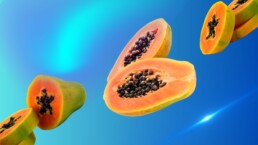
Orange, sweet, and juicy, medium to large in size compared to other fruits, papaya contains small black seeds—more or fewer depending on the variety. It is widely known as a warm-climate fruit and highly valued for its health benefits.
Tracing its origins
LPapaya, scientifically known as Carica papaya, is a fruit native to Mexico and Central America. Indigenous peoples consumed it as part of their traditional diet, and after European contact it was introduced to the Old World. Today, papaya can be found in almost all tropical and subtropical regions around the world.
Papaya is known by many different names, as diverse as the countries where it grows. Some of them include: papaw in Australia, mamão in Brazil, and lechosa or fruta bomba in Cuba and other Spanish-speaking countries.
Nutritional contribution
In addition to being a delicious fruit, papaya provides a wide range of nutrients.
Among its main health benefits is improved digestion, thanks to its proteolytic enzymes—especially papain, which helps break down proteins and supports the digestion of heavy meals.
Its content of vitamin C and carotenoids (provitamin A and lycopene) contributes to antioxidant and protective action, helping to neutralize free radicals and protect the skin and other tissues.
Another outstanding characteristic is its high fiber and water content, making papaya an excellent ally in low-calorie diets when consumed as part of a balanced eating plan.
Global production and current situation
Papaya is predominantly a tropical fruit crop. According to FAO data and market analyses, global production reaches approximately 14–14.5 million tonnes. Among the main producing countries, India stands out as the world’s largest producer, with more than 5 million tonnes in 2023, followed by the Dominican Republic, Indonesia, and Mexico.
In Europe, per capita consumption remains relatively low, although papaya is cultivated in subtropical climates. The main production area is the Canary Islands (Spain), where Canary papaya is mainly grown in Tenerife and other islands. In recent years, production volumes have increased, reaching 22,660 tonnes in the 2024 season.
Although per capita consumption in Europe is still limited, growing demand for exotic fruits has driven an increase in imports.
In recent years, the global trend has shown moderate and steady growth, according to recent market studies.
Industrial uses
Papaya by-products have various industrial applications, particularly in cosmetics, where they are used in exfoliants, masks, and skin and hair care products due to their enzymes and antioxidants.
Another important application is in the pharmaceutical and biotechnology sectors, where papain is used in wound debridement formulations, digestive supplements, and as a laboratory reagent thanks to its proteolytic capacity.
This same enzymatic capacity is also highly valuable in the textile, leather, and detergent industries, where proteases are required for fiber treatment and the removal of protein-based stains.
Papaya can therefore be seen not only as a sweet and juicy tropical fruit, but also as a valuable ally for heavy digestion. Thanks to its “superpower,” the enzyme papain, it helps us feel lighter after rich meals.As part of a balanced diet, papaya allows you to enjoy new flavors and adds variety that stimulates a healthy appetite.
Find out about our products here.

Tree Bread (Jackfruit): The fruit that tastes like all fruits
As is customary, we'll talk about another fruit, this time an exotic one called Jackfruit (Yaca or Jaca), as we recently had the opportunity to try it in Mexico, where we witnessed its cutting and pulp extraction, which, by the way, is not easy at all. You need to keep some tips in mind if you don't want to end up with sticky hands and to know when it's ripe, otherwise, it will taste very acidic.
With a rough, green, and large appearance, the inside reveals the fibrous flesh surrounding the orange-colored arils when they are ready to eat. It has its own unique flavor but is somewhat reminiscent of papaya, mango, and pineapple, which is why some call it the "fruit-flavored fruit." Like most fruits, the riper it is, the sweeter it is, but the smell can be strong, even unpleasant for some sensitive noses. The fruit's ripeness can be recognized just by touching its skin; if it yields slightly, it is ready. It may also show brown tones on the skin, but the secret is not to let it pass that point, or the taste will no longer be optimal.
Its Origin
Jackfruit (Artocarpus heterophyllus) is a tropical fruit, native to South Asia and Southeast Asia; botanical and ethnobotanical evidence places it in the region between Southern India (Western Ghats) and Southeast Asia, where various varieties exist. It is currently found in several Latin American countries such as: Brazil, Venezuela, Ecuador, Peru, Colombia, Mexico, Guatemala, Nicaragua, and the Caribbean. Generally, it thrives in any Latin American country with a warm and humid tropical climate, from sea level up to about 1500 meters of altitude.
This fruit is known by various names such as jaca, nanca, langcá, panpén, or tree bread, among others.
How to Consume It and Care Tips for Peeling / Cutting (Practical Tips)
Regarding consumption: traditionally, in Asia, it is eaten both ripe (the sweet pulp) and green (cooked), and the seeds are also consumed, either boiled or roasted.
- For ripe Jackfruit: Eat the "arils" (the sweet segments) raw or in smoothies, ice creams, and desserts.
- For green (unripe) Jackfruit: It is used cooked in stews, stir-fries, curries, or as a meat substitute in tacos, burgers, or pulled-jackfruit.
- Seeds: They are boiled, roasted, or added to stews — they are edible and rich in starch.
- Trick for peeling without a mess: Smear the knife and your hands with neutral oil (this prevents the sticky sap from complicating the cutting). Cut the fruit lengthwise into quarters or halves, separate the rind, extract the woody core, and separate the arils by pulling away the fibrous tissue; remove the membrane surrounding the seeds. Use gloves if you prefer. These practical recommendations reduce stickiness and allow you to work safely. For more details, watch our video on our social media channels (RRSS).
Demand in Europe and Western markets has grown in recent years, driven by the plant-based trend and its use as a shredded meat substitute (a "pulled" texture). Market reports indicate sustained growth and increased presence in specialized supermarkets, vegan restaurants, and processed products.
Properties and Health Benefits
Jackfruit is nutritious: it provides carbohydrates, fiber, Vitamin C, potassium, and, notably, its protein content (2g) is high for a fruit. It also contains bioactive compounds (flavonoids, lignans) with antioxidant and anti-inflammatory potential. Studies reviewed in scientific literature list it as an interesting source of micronutrients and phytochemicals.
| Nutritional Component | Amount (per 100 g) | Key Contribution |
|---|---|---|
| Energy | 95 kcal | Medium caloric intake |
| Carbohydrates | 23 g | Main energy source |
| Sugars | 19 g | Responsible for its sweetness |
| Dietary Fiber | 1,5 - 2,5 g | Aids digestive health |
| Protein | 1,7 - 2,0 g | High for a fruit |
| Total Fats | 0,6 g | Very low fat content |
| Vitamin C | 10 - 14 mg | Potent antioxidant |
| Potassium (K) | 400 - 450 mg | Heart health and blood pressure |
| Magnesium (Mg) | 25 - 30 mg | muscle and bone function |
Global Production and Expansion
Today, jackfruit is widely cultivated in tropical and subtropical countries. India appears as the largest global producer, followed by Bangladesh, Thailand, and Indonesia; recent reports and agricultural authorities have highlighted India and Bangladesh as the main global suppliers. These are countries where it has been cultivated for centuries and where every part of the plant is widely utilized, from the termite-resistant wood of the tree to dyes for Buddhist monks' robes. Recent data show production concentrated in Asia (India, Bangladesh, Thailand, Indonesia, Sri Lanka). Parallel to this, the industry for processed products (canned goods, frozen pulp, vegetarian/vegan products) exporting to Europe and America has grown. Market analysts project moderate annual growth in the coming years due to the demand for plant-based alternatives.
Open Yourself to New Flavors
Die Jackfrucht ist eine vielseitige, schmackhafte Frucht mit bemerkenswerten Nährwertvorteilen. Wenn du sie noch nicht kennst, suche frische Jackfrucht auf ethnischen Märkten, in Dosenkonserven oder in veganen Produkten auf Jackfruit-Basis. Wage dich an neue Küchenexperimente – von Desserts mit reifer Frucht bis zu herzhaften Gerichten mit der grünen Pulpe. Sie ist nachhaltig, überraschend und für viele einfach köstlich.
Find out about our products here.