


PHYTOCHEMICALS: WHAT THEY ARE AND HOW THEY BENEFIT US
We often hear sayings such as “we are what we eat” or “prevention is better than cure.” This highlights the importance of not only knowing what we eat, but also understanding the effect it has on our bodies, as is the case with phytochemicals. For this reason, on this occasion we will talk briefly about them: what they are and how to consume them to take advantage of their potential.
WHAT ARE THEY?
The word phytochemical comes from the word “phyto,” meaning plant. Phytochemicals are natural chemical compounds produced by plants as part of their defense mechanisms, growth, and pigmentation. There are more than 4,000 phytochemicals, but only about 150 have been studied in depth. Some are known as phytotoxins, which are toxic for consumption; others are antinutrients, which interfere with nutrient absorption; and others are pro-oxidants, which are the focus of this article.
Phytochemicals are important because they provide health benefits when consumed through plant-based foods.
WHERE ARE THEY FOUND?
Their main characteristic is that they can be found in fruits, vegetables, legumes, cereals, and herbs. Among their main properties are antioxidant, anti-inflammatory, and protective effects. They also contribute to the prevention of cardiovascular diseases, certain types of cancer, and metabolic disorders.
The most common phytochemicals include flavonoids, which can be found in citrus fruits, tea, and cocoa. Isoflavones, a type of flavonoid known as phytoestrogens, are found in large amounts in tofu, miso, and tempeh.
Other common phytochemicals include carotenoids, found in carrots and tomatoes, polyphenols, present in grapes, red wine, and olive oil, and glucosinolates, found in broccoli and cabbage. All of these phytochemicals are natural plant substances that help improve health and protect the body.
THE BEST WAY TO PRESERVE THEIR PROPERTIES
It is important to consider that, depending on how foods containing phytochemicals are prepared, their properties may be preserved or lost. Factors that can easily destroy or reduce them include prolonged cooking times, high temperatures, and excessive water. Another way many phytochemicals are lost is through boiling, as they are water-soluble and leach into the cooking water. Frying foods can also degrade them due to high temperatures.
So how can we consume them to preserve their properties and achieve a greater effect in our bodies? Recommended methods include steaming, quick sautéing, microwaving with little time and water, and baking at moderate temperatures.
It should also be noted that some phytochemicals are maintained or even increase their bioavailability when cooked, such as lycopene (tomatoes) and carotenoids (carrots, squash), whose absorption improves with heat and fat. In the case of sulfur compounds in garlic and onions, they are preserved as long as they are not overheated.
EWhen foods are refrigerated, cold temperatures help preserve most phytochemicals. In the case of freezing, if it is done quickly (as in industrial freezing), most phytochemicals are preserved, although some loss may occur during the blanching process prior to freezing.
Therefore, to make the most of them, practical recommendations include combining raw and cooked foods, using little water and short cooking times, and taking advantage of cooking water (soups and broths). Adding healthy fats such as olive oil improves the absorption of phytochemicals.
Often, just a little willpower and information are enough to change habits that will be reflected in our lives, starting small, step by step, toward great transformations. As the saying goes: “Small habits, big changes.” Adding phytochemicals to our lives will have an internal protective effect on our bodies and will strengthen certain cellular functions. Not only will we make our diet more varied and appealing, but we will also take care of our body and mind.
For more information, click here.


RASPBERRY: A FLAVOR THAT’S OUT OF THIS WORLD… OR JUST SPECIAL?
If hearing the word “raspberry” makes you think of delicious ice cream, jam, a dessert, or simply that sweet-yet-tart red fruit, you’re not alone. This is the most common (and for many, the most delightful) way to enjoy it. In this article, we want to talk about this rather “spacey” fruit.
A curious fact I found while reading several articles is that many referenced the idea that the center of the galaxy smells like rum and raspberries. I had never imagined that the universe could smell like fruit! After digging a bit more, I discovered that these claims are based on research findings involving an organic molecule known as ethyl formate—one of the key components that gives raspberries and rum their characteristic aroma. Hence the peculiar statement.
But far from the center of the galaxy, here on Earth we can enjoy not only its aroma but also its natural flavor—whether in a dessert, a smoothie, a cake, or simply fresh. So let’s dive deeper into this delicate fruit.
Origin and History
Its scientific name is Rubus idaeus, belonging to the Rosaceae family, commercially known as “berries” or red fruits. It is believed to originate from Crete, Greece—specifically Mount Ida, which is why it is also known as the raspberry of Ida. In ancient times, this was the highest mountain on the island (now part of Turkish territory) and is mentioned in Greek mythology as the setting of countless mythical events.
As with many fruits, its expansion throughout the world was due to the Romans, who spread its cultivation as their empire grew. As they conquered new territories, they brought their crops with them. Different climates and soils gave rise to new varieties. Today, there are approximately 15 popular varieties, grouped into two main categories: everbearing (which fruit twice a year) and summer-bearing (one harvest). This diversity allows for near year-round availability.
Benefits and Key Nutrients
These small, delicate fruits pose a logistical challenge for marketing and distribution, but it is certainly worth the effort, as they offer many health benefits thanks to their valuable nutrients.Raspberries are rich in micronutrients and bioactive compounds, low in calories, and ideal for a daily diet.
A 100 g serving contains 52 kcal, with high fiber content (6.5 g), vitamin C (25 mg), carbohydrates (12 g), protein (1.2 g), and fat (0.65 g). They also provide vitamin K (important for blood clotting), folate (vitamin B9), vitamin E, and other B-group vitamins, supporting antioxidant and metabolic functions.
Among their minerals are potassium (beneficial for blood pressure), manganese (supports bone development), magnesium and phosphorus (important for muscle development), and iron (essential for oxygen transport).
They also contain bioactive compounds such as antioxidants, including anthocyanins (responsible for their red color) and ellagic acid, both of which help protect cells from free radical damage and reduce inflammation.
All this packed into a tiny fruit—proving that good things really do come in small packages. Raspberries are no exception and can be a great ally for your health when consumed in a balanced diet.
Production and Consumption in Europe and Worldwide
To get an idea of recent global and regional production trends: in 2023, global raspberry production was estimated at 800,000–850,000 tons. The main producing countries from 2020 to 2023 (average production) were: Russia (202,809 t), Mexico (170,276 t), Serbia (111,007 t), Poland (107,025 t), USA (77,665 t), Morocco (48,645 t), and Spain (44,240 t). (Source: FAOSTAT)
In Europe, Spain is the leading supplier of fresh raspberries to the EU, with Andalusia accounting for 99% of Spanish exports. Morocco ranks second with figures similar to Spain, followed by the Netherlands and Portugal, completing the list of the top four suppliers. (Source: 2024 CAPADR)
One of the current market trends is the growing consumer demand for high-quality and “healthy” fruit—meaning organic or chemical-free products.
Just one bite is enough to enjoy this beloved fruit across Europe and the world. Keep discovering the countless creative ways to enjoy it and take advantage of its health benefits. Let your daily diet be varied and nutritious. They say eating is one of the last true pleasures we have—so why not make it a healthy one?
For more information, click here.
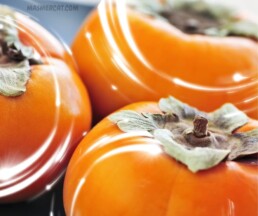
Divine Fire Fruit: The Persimmon
A very familiar name in our shopping basket during the autumn-winter season, also called Sharoni (Triumph), Persimon, Kaki, or Palo Santo.
We’ve decided to dedicate this space to delve a little into its history and how it has earned a special place in consumers’ preferences.
Where Did It Originate?
Divine Fire Fruit: The PersimLike several fruits we’ve discussed in our blog, its origin lies in Asia—specifically China and Japan. Its scientific name is "Diospyros kaki", which means "fruit of the divine fire." In Japan, it is associated with longevity and good fortune, and in many cultures, it symbolizes perseverance and inner strength.
Beyond its symbolism, it is a fruit with rich traditions, sweetness, and numerous health benefits.
In Spain, it was introduced in the 18th century and was warmly received, eventually earning a strong foothold in the fields of Spanish farmers. This is particularly true in the Ribera Alta region of the Valencian Community, where it has flourished with great success and is now the second-largest persimmon-producing region in the world. This effort resulted in the creation of the "Kaki Ribera del Xúquer" Designation of Origin, which we will discuss in greater detail in this article.
Today, Spain, along with Italy, are the largest producers in the European region.
A Unique Flavor?
This is a topic of much discussion among consumers, as persimmons can sometimes be slightly bitter in certain varieties. This characteristic is due to tannins, which give the fruit its astringent taste, leading to classifications as astringent or non-astringent varieties.
Some astringent varieties include: Rojo Brillante, Eureka, Hachiya, and Koushu-Hyakume, which must be eaten when very ripe to avoid astringency. At this stage, the fruit’s texture becomes so soft that it can even be eaten with a spoon. In the case of the Rojo Brillante variety, once the astringency is removed, it is known as Persimon, a protected brand name. After post-harvest treatment, it retains its firmness and develops a sweeter taste.
Non-astringent varieties include: Jiro, Sharon, Honan Red, and Fuyu, which naturally mature until the fruit becomes softer and sweeter.
However, the fruit's soft flesh posed a challenge for commercialization, leading to the search for alternative ripening techniques to produce a sweet yet firm-textured fruit.
With the support of the Valencia Agricultural Research Center and based on the Rojo Brillante variety, a fruit oxidation process was developed, resulting in the Kaki Ribera del Xúquer Designation of Origin mentioned earlier. This product is characterized by firm consistency, an intense orange skin and flesh, a good size, and a sweet flavor.
This innovation has been a great success, enabling easier handling and access to international markets, significantly expanding over the last twenty years.
What Are Its Health Benefits?
The persimmon harvest season in Spain runs from October to January, coinciding with colder weather and the onset of colds and flu. Maintaining a strong immune system is crucial during this time. Nature provides us with many fruits to strengthen our immune systems, from delicious citrus fruits to flavorful berries like persimmons, which offer numerous nutrients.
It contains:
- Antioxidants– Fight free radicals, thereby boosting the immune system.
- Calcium– Strengthens bones.
- Potassium– Improves heart health, blood pressure, and arteries.
- Vitamin A - Enhances eye health.
- Vitamin C - Improves iron absorption and skin appearance.
- Flavonoids - Beta-carotenes that boost the immune system.
- Fiber – Improves digestion and regulates intestinal transit, as soluble fiber retains water and reduces cholesterol levels.
These nutrients make persimmons an excellent addition to your diet, especially during the autumn and winter seasons when they are at their peak. We encourage you to maintain a balanced and healthy diet along with regular exercise. We encourage you to maintain a balanced and healthy diet, as well as a regular exercise routine.
We invite you to explore our products.