



The Apple: Versatility and Tradition
A familiar and historic fruit that has inspired sayings and significant events. In this article, we highlight key facts about its consumption, production, and influence in recent years.
When choosing foods that truly nourish us, it is important to value the countless benefits found naturally in our fields, such as fruits and vegetables.
Who hasn’t heard the saying, “An apple a day keeps the doctor away”? Popular wisdom has its reasons. Undoubtedly, the apple’s properties and nutrients have been highly valued throughout the centuries, becoming so influential in cuisine that it is easy to think of an apple-based dessert—just imagining it makes one’s mouth water. Apple pie or beverages such as cider, an emblem of celebration with an exquisite and sparkling flavor, are perfect examples. Without a doubt, the apple remains a favorite fruit in our diet.
The apple has also been surrounded by symbolism and representation. For Isaac Newton, it served as inspiration for the law of gravity, while in modern times, the bitten apple has become a symbol of technological innovation through the brand Apple.
Nutritional Contribution of the Apple
The benefits of regular apple consumption are noticeable in both body and mind, especially when combined with a balanced diet.
Below are its main nutritional components and benefits:
- Dietary fiber, including pectin, which improves digestion and helps regulate cholesterol.
- VitaVitamin C and B-group vitamins, which strengthen the immune system.
- Minerals such as potassium, supporting blood pressure regulation and muscle function.
- Antioxidants and polyphenols, mainly found in the peel, which combat oxidative stress. Quercetin, in particular, protects brain cells, supporting memory and reducing the risk of age-related cognitive decline.
- Fitoquímicos o bioactivos como catequinas, florizina y ácido clorogénico. Compuestos relacionados con la reducción de riesgo de enfermedades cardiovasculares, ciertos tipos de cáncer y con la modulación de la inflamación.
With this information in mind, we may wonder when the last time was that we ate an apple, truly savored it, and enjoyed it. Were we aware of every crunchy bite and its benefits? In an increasingly fast-paced life, taking a moment to appreciate simple, everyday actions—such as mindful eating—can help us make the most of these moments and nourish ourselves wisely.
Global Apple Consumption
A look at producing countries and the current situation of apples in international trade shows that global production is estimated at 95–97 million tons per year, according to the FAO.
Main producers include:
- China, the undisputed leader, accounting for 44–57% of global production (47–48 million tons annually).
- Turkey, with approximately 4.5–4.8 million tons.
- The United States, with around 4.4–5 million tons.
- Poland, producing 3.8 million tons and leading the EU market.*
Within the EU, the main producing countries are:
- Poland (3.8 million tons), representing 32% of EU production.
- Italy (2.8 million tons), leader in premium export varieties.
- France (1.5 million tons), with a slight 4% decline compared to the previous year, but excellent size and flavor.
- Germany (1 million tons), reaching a record harvest in 2025 due to the absence of frost.
- Spain (500,700 tons), with an 8% decrease due to drought.*
An interesting fact is that only 10% of global apple production is traded internationally.
In Spain, the main producing areas are Catalonia (Girona and Lleida), Soria in Castilla y León, Aragón, and Asturias. Although Spain represents a smaller share compared to Poland, Italy, or France, it remains competitive within the European market.
Varieties and Consumption
Depending on soil conditions, climate, and producer care, apples develop distinctive flavors, textures, shapes, and culinary uses. Today, thousands of varieties exist, divided into classic and “club” or emerging varieties.
Classic varieties:
- Gala / Royal Gala: bicolor, very crunchy, leading export variety and fastest-growing in new plantations.
- Golden Delicious: nearly half of Spain’s total production.
- Red Delicious: deep red, elongated shape, popular in southern Europe and export markets outside the EU.
- Idared: slightly acidic, common in Poland and Eastern Europe due to its storage capacity.
- Jonagold / Jonaprince: large, balanced, and popular in Germany, Belgium, and the Netherlands.
Club and emerging varieties (registered brands with premium flavor):
- Granny Smith: green, firm, acidic, excellent for cooking and fresh consumption.
- Pink Lady (Cripps Pink): aromatic, sweet-acid balance, very popular; reached a production record of 319,000 tons in Italy in 2025.
- Kanzi: crunchy and refreshing, popular in Northern Europe.
- Fuji: of Japanese origin, widely grown in Spain and Italy due to its high sugar content.
A major trend in Europe is the shift toward climate-resilient varieties and organic production, which already represents a significant share in countries such as Austria and Germany.
The apple is a complete and fascinating fruit: rich in nutrients and bioactive compounds that support physical and mental health, with a strong historical legacy and great culinary versatility. Today, it remains economically important and plays a key role in global agriculture, while continuing to be one of the most beloved and beneficial fruits for daily consumption.
Discover more about our products. Click here.
Note: The figures correspond to final harvest estimates published between late 2024 and early 2026. Volumes may vary slightly depending on the final report of stocks in cold storage.
*Source: WAPA (World Apple and Pear Association) and national organizations.

Mamey: El Fruto Tropical que Debes Probar
As we have done with our previous articles on fruits, this one is dedicated to a lesser-known, exotic fruit. We hope this article sparks your interest and encourages you to try it.
Mamey (Pouteria sapota), also known as Zapote, is a tropical fruit of great historical, cultural, and economic significance in Mesoamerica and the Caribbean. With its unmistakable flavor and creamy texture, this exotic fruit has captivated those seeking a natural and nutritious delicacy.
Origin and History
Archaeological evidence suggests that mamey has been part of indigenous diets for over 2,000 years. It was highly valued not only for its sweet taste and high energy content but also for its medicinal properties. Pre-Hispanic codices and colonial chronicles reference this fruit as a key element in Mesoamerican trade.
With the arrival of Spanish colonizers, mamey spread to other tropical regions of the Americas, including Mexico, Cuba, the Dominican Republic, and parts of South America. Today, it is a popular fruit in various countries and is primarily cultivated in warm, humid climates.
The leading producers of mamey include Mexico, Cuba, the Dominican Republic, Costa Rica, and several Caribbean and South American countries, where tropical climates support optimal growth.
What Are Its Health Benefits?
Mamey is not only delicious but also packed with essential nutrients that offer numerous health benefits. Some of its key components include:
Rich in Vitamins A, C, and E, supports eye health, strengthens the immune system, and protects the skin against aging. Rich in Vitamins A, C, and E, supports eye health, strengthens the immune system, and protects the skin against aging.
Loaded with Natural Antioxidants– The presence of carotenoids and polyphenols makes it an excellent ally against free radicals, reducing the risk of chronic diseases.
Contains Healthy Fatty Acids , these natural oils benefit cardiovascular health and help keep the skin hydrated.
Su contenido en carotenoides y polifenoles lo convierte en un excelente aliado para combatir los radicales libres y reducir el riesgo de enfermedades crónicas. Además de ácidos grasos saludables, contenidos en su pulpa, estos aceites naturales benefician el sistema cardiovascular y mantienen la piel hidratada.
How to Identify a Good Mamey Fruit
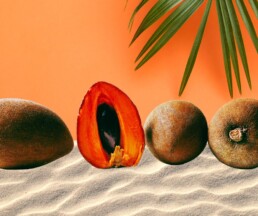
Mamey is a medium to large-sized fruit with a thick, rough brown skin that protects its vibrant orange or reddish pulp. The flesh has a creamy, smooth texture, similar to that of an avocado, and its sweet flavor carries hints of almond and vanilla, making it highly prized in culinary applications. At its center lies a large, dark seed, often used in traditional remedies and mamey oil production.
Mamey Consumption in Europe
In recent years, mamey has gained popularity in Europe due to the growing demand for exotic and healthy foods. Although its distribution remains limited compared to other tropical fruits, it can be found in specialty markets and Latin American food stores. Countries like Spain and France have shown increasing interest, particularly within Latin American immigrant communities and gourmet cuisine, where it is used in desserts and beverages.
Mamey in the Industry
One of the standout byproducts of mamey is its seed oil, widely used in hair and skincare treatments. This oil is known for:
- Preventing hair loss
- Acting as a natural conditioner
- Controlling frizz
- Strengthening eyelashes and nails
- Providing heat protection for hair styling tools
For skincare, mamey oil serves as a natural emollient with moisturizing, antioxidant, and anti-inflammatory properties, making it ideal for skin protection and regeneration.
Additionally, it has therapeutic and medicinal uses, such as:
- Treating various scalp and skin conditions
- Relieving insect bites and irritations
- Moisturizing chapped lips
- Enhancing relaxation through massages
Culinary Uses of Mamey
Mamey is a versatile fruit that can be enjoyed in multiple ways. It is often eaten fresh by simply cutting it in half and scooping out the flesh with a spoon. It is also a key ingredient in smoothies, ice creams, desserts, jams, and even savory sauces. Its natural sweetness makes it a great alternative to refined sugars in various recipes.
Our top recommendation is a mamey smoothie with skim or plant-based milk—no added sweeteners needed, as the fruit is naturally sweet.
To fully enjoy its flavor and benefits, it is best to select mameys at their peak ripeness when their skin slightly yields to pressure and emits a sweet aroma.
Dare to try mamey and find out why it is considered a tropical treasure full of flavor and nutrition! Get to know our products, just with a click.